

What You Should Know About Cochlear Implants
With so many hearing technologies available today, it’s easy to feel overwhelmed.
One option that stands out is the cochlear implant: a solution designed for people living with severe to profound hearing loss.
But what exactly is it? How does it work? And what can you expect if you decide to explore it? Let’s break it down.
Who Can Benefit?
A cochlear implant can help some people with severe to profound hearing loss hear better. Unlike hearing aids, which simply make sounds louder, a cochlear implant works differently: it replaces the function of the damaged part of the inner ear—the cochlea.
Sounds are transformed into electrical signals that directly stimulate the auditory nerve, allowing the brain to receive and interpret the information.
How Does a Cochlear Implant Work?
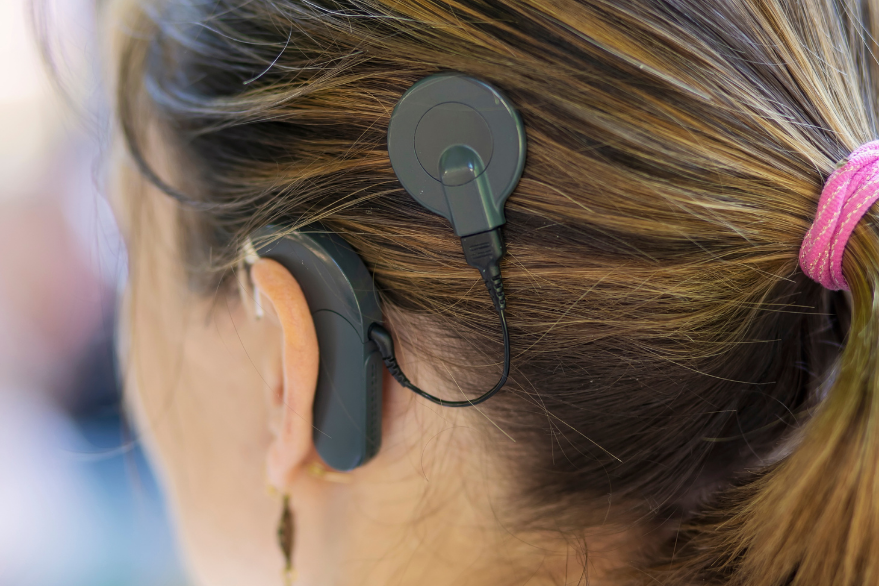
A cochlear implant has two parts: one outside the ear and one inside.
-
The external part includes a small processor and an antenna. It captures sounds around you, analyzes them, and converts them into signals.
-
The internal part is implanted under the skin during surgery. It turns the signals into electrical impulses sent through tiny electrodes.
These electrodes replace the damaged cochlear cells and stimulate the auditory nerve, which passes the sound to your brain.
The Steps to Getting a Cochlear Implant
Before surgery, your case is reviewed by a team of experts: ENT doctors, audiologists, and sometimes psychologists. Additional hearing tests help determine if a cochlear implant is right for you.
The surgery itself lasts around two hours under general anesthesia.
In Quebec, this procedure is done at specialized centers, including CHU de Québec–Université Laval in Quebec City and the McGill University Health Centre in Montreal.
After surgery, your cochlear implant is activated and programmed by an audiologist.
Adjusting to Your New Hearing
Once your implant is turned on, your brain needs time to learn to recognize and interpret sounds, which may seem different at first.
To help with this adjustment, most people attend rehabilitation sessions over a 10-week period. These sessions are designed to optimize your hearing and improve speech understanding in everyday life.
What to Expect
Results vary. Some people can understand speech without seeing the speaker’s face, while others continue to rely on lip-reading.
Hearing in noisy environments may remain challenging, and music may sound different.
Even so, a cochlear implant can greatly improve communication and quality of life for many people.
If you have questions, your audiologist or ENT doctor can guide you through the process.
Written by Marilyne Trépanier, Audiologist